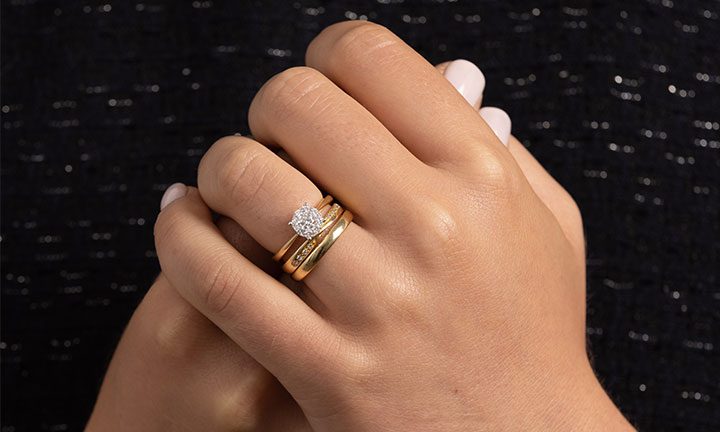

A yellow gold ring can look delicate in a jewellery photograph yet feel surprisingly substantial on the hand. Two rings with the same diamond and gold colour may differ considerably in comfort, durability and appearance. The difference often comes down to details that are easy to overlook: alloy composition, band thickness, setting height and the way the metal frames the gemstone.
For someone choosing an engagement ring, wedding band or everyday piece, these details deserve as much attention as the design itself. Understanding how yellow gold behaves, and how it works with different diamonds, makes it easier to select jewellery that will remain practical over years of wear.
14K or 18K: What Does the Gold Content Actually Change?
Pure gold is relatively soft, so jewellers combine it with other metals to produce alloys suitable for rings. The karat number indicates the proportion of gold, not the overall craftsmanship or durability of the finished piece.
In Germany, buyers commonly encounter two specifications:
- 14K yellow gold (585): Contains 58.5% pure gold. Its alloy composition generally offers a useful balance of strength, wear resistance and gold content.
- 18K yellow gold (750): Contains 75% pure gold. It typically has a richer yellow appearance, although the exact shade depends on the alloy mixture.
Neither is automatically superior.
For a ring worn through daily activities, 14K can be a practical option, particularly for designs with slender bands. Someone who prefers a stronger gold colour may favour 18K, accepting that its surface can be more susceptible to scratches and deformation depending on the alloy and construction.
The difference is especially noticeable when comparing rings side by side under natural light. Product photographs alone may not accurately represent the colour variation.
Why Band Proportions Matter as Much as Gold Purity
A narrow yellow gold band creates an understated appearance and can make a centre diamond seem larger. However, reducing the amount of metal also affects structural strength.
A very thin shank may be more vulnerable to bending, particularly beneath a raised diamond setting. This becomes relevant when a ring is worn frequently or needs resizing later.
Band width and thickness should be considered together. A ring can appear slim from above while retaining enough depth to support its setting.
The shape of the band also influences comfort. Rounded interior edges, often described as comfort-fit profiles, can feel smoother against the finger. However, they do not eliminate the need for accurate sizing.
For buyers in Germany, ring sizes are typically expressed using the inner circumference in millimetres. A size 54, for example, corresponds to approximately 54 mm of internal circumference.
Trying a ring with a similar width is useful because wider bands can feel tighter than narrow ones at the same nominal size.
The Relationship Between Yellow Gold and Diamond Colour
Yellow gold creates a warm frame around diamonds, but the effect varies with diamond shape, colour grade and setting design.
Colourless diamonds can produce a distinct contrast against yellow gold. Near-colourless stones may also look attractive, especially when the warmth of the metal complements their appearance.
This introduces an opportunity to reconsider diamond specifications rather than automatically selecting the highest available colour grade.
A diamond graded G or H, for example, may offer a suitable visual balance in certain yellow gold designs. Its appearance will still depend on cut quality, size and individual colour characteristics.
The setting metal makes a difference, too.
Some designs combine a yellow gold band with white gold or platinum prongs. The lighter-coloured prongs provide a different visual frame around the centre stone while preserving the warmth of the band.
Before selecting a diamond, examine photographs or videos showing it against the intended metal colour, ideally under different lighting conditions.
Lab-Grown Diamonds and the Importance of Cut Quality
Lab-grown diamonds have essentially the same chemical composition, crystal structure and optical properties as natural diamonds. Their laboratory origin does not remove the need to evaluate individual stone quality.
A well-proportioned cut influences brightness, fire and light return. These characteristics often have a greater visible impact than small differences between high clarity grades.
For round brilliant diamonds, cut grading offers a useful starting point. Fancy shapes such as ovals and emerald cuts require additional attention to proportions, symmetry and visual characteristics.
Buyers comparing yellow gold rings with lab-grown diamond options should assess the setting and stone together rather than treating them as separate purchasing decisions.
An independent grading report, such as one issued by IGI or GIA, can help establish the diamond’s documented characteristics. The report should be checked against the specific stone being purchased.
Setting Styles That Change Everyday Practicality
The appearance of a yellow gold diamond ring depends heavily on how the stone is mounted. The setting also determines how exposed the diamond is during ordinary activities.
Solitaire settings place attention on a single centre stone. A low-profile solitaire may be easier to wear beneath gloves or fitted sleeves, provided the overall design allows sufficient clearance.
Bezel settings surround the stone’s perimeter with metal. They provide additional protection around exposed edges and reduce the likelihood of prongs catching on fabric. The trade-off is a more substantial metal outline.
Pavé settings add smaller diamonds along the band. They create extra sparkle but introduce additional stone settings that may require inspection or maintenance.
Halo settings frame the centre diamond with smaller stones. They can increase its apparent visual size, although the design may require more careful cleaning around the smaller settings.
The most appropriate option depends on how the ring will be worn. A person who frequently works with their hands may appreciate a lower setting with fewer exposed details.
Engagement Rings and Wedding Bands Need to Work Together
A yellow gold engagement ring may look balanced on its own but sit awkwardly beside a straight wedding band.
The position of the centre stone and the shape of its basket determine whether another ring can sit flush against it.
Some raised settings leave enough clearance for a straight band. Others create a visible gap or require a curved wedding ring.
Neither arrangement is necessarily undesirable, but it should be intentional.
For a coordinated bridal set, it helps to examine both rings from the side rather than relying exclusively on a top-down photograph.
Matching gold purity is another consideration. Using similar alloys can help maintain a consistent appearance, although differences in surface finish and wear may still become visible over time.
Details Worth Confirming Before Ordering
Online product descriptions do not lab grown diamonds reveal how a ring will feel or function. Before placing an order, ask the jeweller to confirm:
- The gold purity and approximate band dimensions.
- Whether the ring can be resized and what limitations apply.
- The height of the setting and compatibility with a wedding band.
- Whether the diamond comes with an independent grading report.
- The conditions for returns, repairs and maintenance.
Engraving, extensive pavé work and certain continuous-band designs can complicate future resizing. Custom-made rings may also be subject to different return conditions, so these should be reviewed before personalisation.
Yellow gold requires routine care regardless of its karat rating. Gentle cleaning helps remove accumulated oils and residue, while periodic professional inspection can identify worn prongs or loose stones.
For a ring intended to be worn for decades, the strongest design is rarely determined by gold purity or diamond size alone. Appropriate proportions, secure stone setting and realistic maintenance expectations have a much greater influence on how comfortably the piece fits into everyday life.