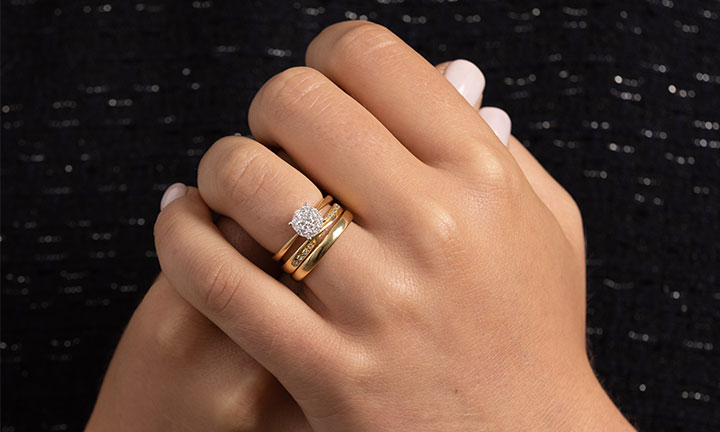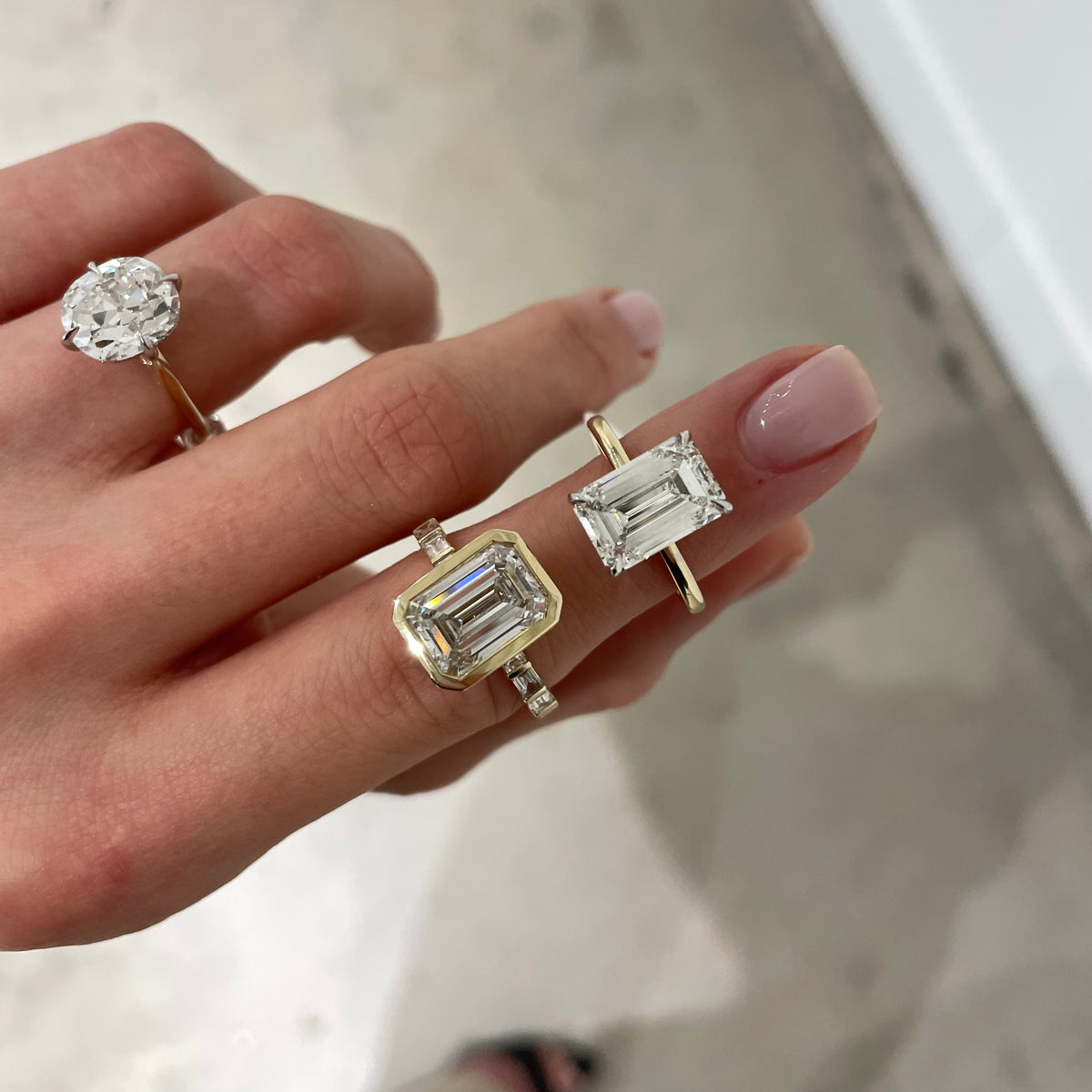

What lab created diamonds actually are
Lab created diamonds are real diamonds grown in controlled environments rather than mined from the earth. Their chemical structure is carbon. Their optical properties match mined diamonds. When cut and polished, they look the same to the naked eye.
They are produced using two primary methods. High Pressure High Temperature and Chemical Vapor Deposition. Both replicate conditions that form diamonds naturally. The result is a diamond that meets the same grading standards used by gem labs.
This matters because you are not choosing a substitute. You are choosing a different origin.
Why origin matters when you are designing a ring
When you design a ring from scratch, every choice has a ripple effect. Diamond origin affects cost, availability, design freedom, and how you feel about the piece over time.
A lab created diamond gives you predictable supply. That makes it easier to source a specific shape or size. It also gives you cost control. You can allocate more of your budget to design details like setting structure or band thickness.
Example
You want an oval diamond with specific proportions and a low profile setting. A lab grown option lets you choose the diamond first, then design the ring around it without stretching your budget.
Cost differences you should understand clearly
Price is not a side detail. It shapes every decision that follows.
Lab created diamonds typically cost less than mined diamonds of the same grade. The difference varies by size and quality. As carat weight increases, the gap often becomes more noticeable.
What this means for you
You can choose a higher clarity or color grade without increasing total cost.
You can increase carat size while keeping proportions balanced.
You can invest in craftsmanship rather than raw material.
This is especially relevant if you are planning custom engagement rings where design labor is a meaningful part of the final price.
Visual quality and grading reality
Diamonds are graded using the same criteria regardless of origin. Cut, color, clarity, and carat apply equally.
In practice, lab created diamonds often show fewer inclusions. This is due to controlled growth conditions. That does not make them better by default. It makes them more consistent.
What you should still check
Independent grading reports
Cut quality rather than just carat size
How the diamond performs in real light
Do not rely on origin to guarantee beauty. Rely on evaluation.
Ethical and environmental considerations without slogans
Some buyers choose lab created diamonds to avoid mining impacts. Others focus on transparency. These are personal decisions, not universal truths.
Lab creation reduces land disruption and avoids certain labor concerns. It also requires energy. The source of that energy varies by producer.
If ethics matter to you, ask direct questions. Where was the diamond grown. What energy sources were used. What certifications are available.
Clarity comes from specifics, not claims.
Design flexibility in custom engagement rings
Custom work benefits from predictability. Lab created diamonds provide that.
You can design around precise measurements. You can plan structural elements with confidence. This reduces last minute changes and compromises.
Common design advantages include
Thinner prongs with adequate support
Lower settings without sacrificing security
Matching side stones with consistent color
If you value design precision, this flexibility is practical.
Resale value and long term thinking
Engagement rings are not financial instruments. Still, you may wonder about future value.
Lab created diamonds currently have lower resale prices than mined diamonds. This reflects market perception and supply dynamics. It does not reflect durability or appearance.
If you are buying with resale in mind, be honest about priorities. If you are buying to wear daily for decades, focus on design comfort and structural integrity.
Example
A well designed ring that fits your hand and lifestyle will matter more than theoretical resale value you may never use.
How to choose a lab created diamond for a custom ring
Start with how you will wear the ring. Daily wear demands durability and comfort.
Then consider these steps
Set your total budget first
Decide which quality factors matter most to you
Choose the diamond before finalizing the setting
- Prioritize cut quality for sparkle
- Balance carat size with finger coverage
- Confirm grading from a recognized lab
Avoid choosing in isolation. The diamond and setting should support each other.
Working with a jeweler on custom engagement rings
Communication is more important than expertise. You need a jeweler who explains decisions clearly and listens.
Ask how many custom projects they complete each year. Ask how revisions are handled. Ask to see finished work rather than sketches alone.
A good process includes
Clear timelines
Written design approvals
Stone inspection before setting
You should feel informed at each stage.
Common misconceptions that slow decisions
Some beliefs create hesitation without adding value.
Lab created diamonds are not fake.
They do not wear out faster.
They are not lower quality by default.
What matters is execution. Poor cutting or weak settings can happen with any diamond type.
Focus on craftsmanship and fit.
Is a lab created diamond right for you
There is no correct answer. There is only alignment.
Choose based on how you want to allocate resources, how much control you want over design, and what values you prioritize.
If personalization and clarity matter, lab created diamonds integrate well into custom engagement rings.
FAQ
Do lab created diamonds look different from mined diamonds?
No. To the eye, they look the same. Differences require specialized equipment to detect.
Can a lab created diamond be reset or resized later?
Yes. They have the same physical properties as mined diamonds and can be worked on by qualified jewelers.
How long does it take to make a custom ring with a lab created diamond?
Timelines vary. Many projects take four to eight weeks depending on design complexity and revision cycles.