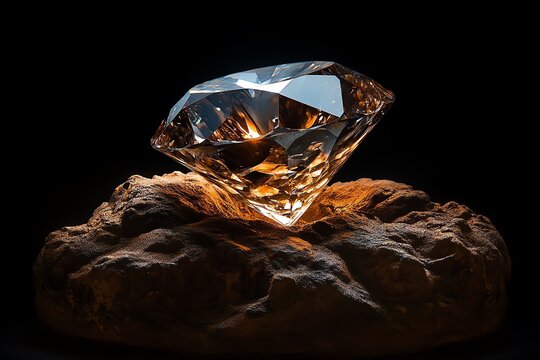

A few years ago, if you’d told me diamonds could be grown, I probably would’ve raised an eyebrow and poured another coffee. The idea sounded more like a sci-fi experiment than something you’d actually slip onto your finger. But here we are — 2025 — and lab grown diamond jewellery has quietly (and rather beautifully) disrupted one of the most traditional industries on the planet.
The sparkle is the same, the brilliance just as breathtaking, and yet the story behind these gems feels refreshingly different. There’s something deeply modern about the idea that luxury and ethics can coexist — that you can wear something exquisite without the heavy history that’s often weighed down the diamond trade.
I’ve spent the past few months digging into this world — talking to jewellers, visiting local boutiques, and even trying on a few pieces myself — and honestly, I came away genuinely impressed. This isn’t a passing fad. It’s a cultural shift.
What Exactly Are Lab Grown Diamonds?
Let’s get one thing clear straight off the bat: a lab grown diamond isn’t an imitation. It’s not cubic zirconia or moissanite. These are real diamonds — physically, chemically, and optically identical to the ones mined from deep within the earth. The only difference is their origin.
Instead of spending billions of years forming underground, lab made diamonds are created in controlled environments that replicate the same natural conditions — extreme heat and pressure — just sped up and fine-tuned by technology.
There are two main methods: High Pressure High Temperature (HPHT) and Chemical Vapour Deposition (CVD). If that sounds complicated, don’t worry — most people never need to know which is which. What’s fascinating, though, is that both techniques start with something called a diamond seed — a tiny sliver of carbon that grows layer by layer until it becomes a full-sized gemstone.
And the result? Even trained gemologists often can’t tell the difference without using specialised equipment.
Why Australians Are Falling for Lab Grown Diamond Jewellery
Here’s something I didn’t expect to hear from so many jewellers: young Australians are now actively asking for lab grown stones.
It’s not just about price (though, let’s be honest, that helps). A one-carat lab grown diamond can cost anywhere between 40 to 70 per cent less than its mined equivalent. That’s a big deal when you’re planning an engagement ring, upgrading earrings, or choosing a custom pendant.
But the real drawcard seems to be values.
People want to know where their jewellery comes from. They want transparency, traceability, and sustainability. And for many, lab grown stones tick those boxes beautifully. No massive mines, no questionable sourcing, no environmental scars.
Even brands that once swore by natural diamonds are shifting their focus. I recently spoke with a Melbourne designer who told me, “It’s not about replacing mined diamonds; it’s about giving people a choice that aligns with how they live now.”
That statement stuck with me. It’s not about guilt or judgment — it’s about evolution. The same way we’ve embraced electric cars, plant-based food, and renewable energy, lab grown diamonds simply make sense in a modern context.
For anyone curious, the range of lab grown diamond jewellery available now is genuinely impressive — from classic solitaires to stunning bespoke pieces that feel every bit as luxurious as their mined counterparts.
The Emotional Side of a “Made, Not Mined” Diamond
Here’s the funny thing about diamonds: they’re as emotional as they are physical. When you give or receive one, it’s rarely just about the sparkle — it’s about the sentiment behind it.
And surprisingly, that emotion doesn’t fade with lab grown diamonds. If anything, it deepens.
I remember chatting with a couple in Sydney who’d just designed their engagement rings with lab made stones. When I asked how they felt about skipping the “traditional” mined route, the bride laughed and said, “We didn’t feel like we were missing out on anything. It actually felt more us — more conscious, more thoughtful.”
There’s something beautiful about that. Love stories evolve, and so does the symbolism behind them. What used to represent wealth and permanence now also represents responsibility and awareness.
Plus, the ability to personalise lab grown pieces — choosing your own cut, carat, and setting — gives people more creative freedom than ever before. It’s no longer just about owning a diamond; it’s about crafting one that reflects you.
Let’s Talk About Quality (and Myths)
A common misconception I still hear — even from people who should know better — is that lab made diamonds aren’t as “good” as natural ones.
Here’s the truth: they’re identical in every measurable way. The Gemological Institute of America (GIA), one of the world’s top diamond authorities, grades lab grown stones using the exact same standards as mined diamonds — cut, clarity, colour, and carat.
If anything, lab grown diamonds often come out cleaner. Why? Because their controlled creation process eliminates many of the inclusions and imperfections that occur in natural formations.
Of course, there are still variations — no two diamonds are ever exactly the same — but that’s part of the charm. Each stone has its own fingerprint, its own little quirks.
The only difference is the story behind it — and for many, that’s a story they’re proud to tell.
The Environmental and Ethical Angle
Mining has always been a touchy subject. Even with improved regulations and more responsible practices, traditional diamond extraction still comes with heavy environmental costs — deforestation, habitat loss, carbon emissions, and significant water use.
Lab grown diamonds, on the other hand, use a fraction of those resources. Some labs now operate on renewable energy, drastically reducing their carbon footprint.
It’s not a perfect solution (no luxury item ever truly is), but it’s a remarkable improvement. The shift feels similar to what we’ve seen in other industries — fashion, food, travel — where ethics and aesthetics are starting to work hand in hand.
For younger buyers especially, that matters. A ring isn’t just a piece of jewellery anymore; it’s a reflection of who they are and what they stand for.
What About Resale Value?
Ah, the big question. This one comes up a lot.
Right now, lab grown diamonds don’t hold resale value the way mined ones traditionally do. But here’s the catch — most people don’t buy diamonds as an “investment” anymore. They buy them as symbols of love, milestones, or self-celebration.
And interestingly, as the market for lab made stones grows (and it’s growing fast), experts predict that the value perception will shift. Just like vintage fashion or early tech collectables, today’s “modern alternatives” often become tomorrow’s classics.
Besides, if you’re saving thousands upfront, you’re already ahead of the game.
A Quick Word on Style and Design Trends
One of the most exciting things about this shift to lab grown jewellery is what it’s done for design. Jewellers are experimenting again.
Without the constraints of expensive mined stones, creatives can play with bigger designs, bolder settings, and more accessible price points. We’re seeing everything from delicate minimalist bands to maximalist cocktail rings dripping in sparkle.
It’s a new wave of luxury — one that feels lighter, fresher, and surprisingly democratic.
If you’re exploring gift ideas, you might find some inspiration in guides like this lab made diamonds feature, which offers clever ideas for anniversaries and special occasions. It’s proof that meaningful gifts don’t have to come with a traditional mindset attached.
From Heirlooms to Everyday Wear
Another shift I’ve noticed is how people are wearing diamonds differently. They’re no longer just for engagements or formal events. With lab grown diamonds making fine jewellery more attainable, people are wearing them day-to-day — stacked rings, delicate necklaces, even tennis bracelets for casual brunches.
It’s this idea that luxury doesn’t have to be reserved for rare moments; it can be something you live with, not just look at once a year.
And honestly, that feels quite Australian. We’ve always had a relaxed approach to fashion — effortless, unfussy, a bit cheeky at times. Lab grown diamonds fit right into that lifestyle.
So, Where Does This Leave Us?
When I started researching this piece, I thought lab grown diamonds were just another tech trend dressed up as sustainability. But the more stories I heard — from jewellers, couples, even gemologists — the more I realised it’s much bigger than that.
It’s about redefining what luxury means in a world that’s more conscious, more connected, and, frankly, more curious.
Choosing a lab grown diamond isn’t about rejecting tradition; it’s about reshaping it. It’s saying, “I want beauty, but I also want meaning.”
And that’s a message worth wearing.
Final Thoughts
Every diamond, whether mined or made, tells a story. The brilliance might catch your eye, but it’s the story that stays with you.
For me, the appeal of lab grown diamond jewellery lies in that quiet confidence — the idea that something stunning can also be smart, sustainable, and socially aware.
It’s a reminder that luxury doesn’t have to be loud to be powerful. Sometimes the most beautiful things are the ones that evolve — just like we do.
So next time you find yourself browsing a jeweller’s window, maybe pause a moment. Look closer. You might be surprised by how far a little sparkle has come.