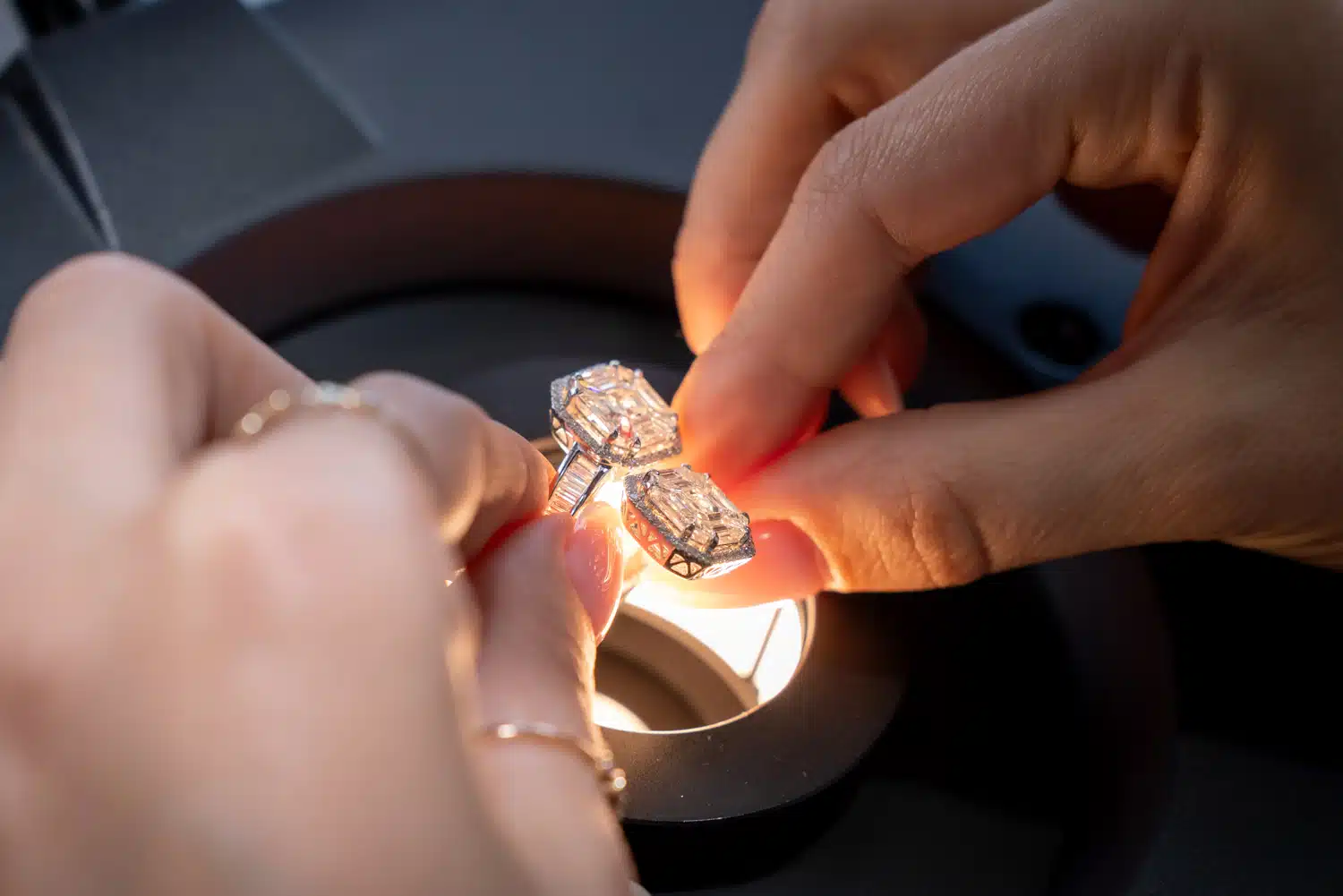

A wedding band represents a lasting commitment, but choosing one also involves personal style, comfort, and budget. Lab-grown diamonds have become an appealing option for couples who want the brilliance of traditional diamonds with more flexibility in their spending.
These stones offer the same essential physical, chemical, and optical properties as mined diamonds. They also come in various shapes, sizes, and settings, making them suitable for both classic and contemporary jewelry designs. Understanding their qualities can help couples choose a ring that feels meaningful and practical.
What Makes Lab-Grown Diamond Wedding Bands Different?
A lab diamond wedding band features diamonds created in controlled laboratory environments rather than extracted from the earth. Manufacturers typically use two methods: High Pressure High Temperature (HPHT) and Chemical Vapor Deposition (CVD).
Both processes produce genuine diamonds with the same crystal structure as natural stones. Their differences relate to their origin, not their fundamental composition or appearance.
Gemological laboratories can distinguish between laboratory-grown and natural diamonds using specialized equipment. However, ordinary visual inspection cannot reliably identify their origin.
Popular Styles For Every Preference
Wedding bands come in several designs, each offering a different appearance and level of everyday practicality.
Classic Eternity Bands
Eternity bands feature diamonds arranged around the entire circumference of the ring. This design creates continuous sparkle and symbolizes enduring commitment.
Full-eternity styles look elegant but can be difficult to resize. Half-eternity bands offer a practical alternative because their lower sections contain plain metal. They also tend to require less maintenance.
Pavé Diamond Bands
Pavé settings feature small diamonds placed closely together along the ring’s surface. Tiny metal prongs hold each stone in position, creating a continuous appearance of brilliance.
These bands work particularly well for people who appreciate delicate details. However, their smaller stones and intricate settings require occasional professional inspections.
Channel-Set Bands
Channel settings hold diamonds between two parallel strips of metal. This arrangement protects the stones’ edges and creates a smooth surface.
The design suits people who prefer understated jewelry. It also reduces the likelihood of snagging compared with some exposed settings.
Contoured And Curved Bands
Some engagement rings have unusual shapes or prominent center stones. A straight wedding band may leave an awkward gap beside these designs.
Contoured bands follow the engagement ring’s outline, creating a closer fit. They can also provide a distinctive appearance when worn independently.
Choosing The Right Diamond Quality
Diamond quality influences a ring’s appearance, price, and overall character. The traditional 4Cs provide a useful starting point.
- Cut: Determines how effectively a diamond reflects and returns light. Excellent or very good cuts generally produce attractive brilliance.
- Color: Measures how much yellow or brown tint a diamond displays. Near-colorless grades often provide a balanced combination of appearance and cost.
- Clarity: Describes internal inclusions and external blemishes. Minor inclusions may be invisible without magnification.
- Carat: Measures diamond weight rather than physical dimensions. Smaller stones can still create impressive sparkle when arranged carefully.
For wedding bands, consistency matters. Matching the diamonds’ color and appearance creates a more balanced design, particularly in eternity and pavé settings.
Selecting A Metal That Complements Your Ring
The metal affects both appearance and maintenance requirements.
Platinum offers natural white color, substantial weight, and excellent durability. It develops a surface patina over time, which some owners appreciate.
14K and 18K gold remain popular choices. White gold offers a bright, contemporary appearance, although its rhodium plating may need periodic renewal. Yellow and rose gold provide warmer alternatives.
Consider the metal used in an engagement ring before choosing a matching band. Similar colors create a coordinated look, while contrasting metals can produce an intentional two-tone design.
Are Lab-Grown Diamonds Suitable For Everyday Wear?
Yes. Lab-grown diamonds have a Mohs hardness of 10, making them highly resistant to scratching. Their durability makes them suitable for jewelry worn regularly.
However, hardness does not mean they are indestructible. A strong impact can still chip a diamond, particularly around exposed corners or edges.
The setting also affects long-term performance. Prongs, pavé details, and small accent stones should receive periodic professional inspections. Remove your ring during heavy manual work, exercise involving equipment, and activities that could expose it to impact.
Understanding Price And Long-Term Value
Laboratory-grown stones generally cost less than comparable natural diamonds. This price difference allows buyers to consider larger stones, more elaborate settings, or higher color and clarity grades.
However, purchase price and resale value are different considerations. Lab-grown diamonds generally have limited resale value, and their market prices have declined as production technology has improved.
Buyers should therefore approach wedding bands as meaningful personal purchases rather than financial investments. Compare specifications, craftsmanship, warranties, and return policies before making a decision.
Making A Wedding Band A Lasting Choice
The right wedding band should complement your engagement ring, suit your daily routine, and feel comfortable over time. Pay attention to setting security, metal quality, ring width, and the possibility of future resizing.
With their genuine diamond properties, varied designs, and accessible pricing, lab diamonds give couples more freedom to prioritize the features they value most. A carefully selected band can offer lasting beauty without requiring an unnecessarily complicated purchase.