
Two diamond earrings can have the same total carat weight yet look noticeably different on the ear. One pair may appear bright and balanced, while another seems smaller or less lively despite similar specifications.
That difference often comes down to details buyers overlook: how carat weight is divided between the two stones, cut quality, setting style, diamond matching, metal colour, and even the type of earring back.
For buyers in Singapore comparing diamond earrings for daily wear, gifting, or a special occasion, understanding those details makes it easier to spend on characteristics that are visible rather than specifications that add cost with little visual benefit.
Start With the Look You Want on the Ear
Diamond earrings are usually selected differently from engagement rings. An engagement ring is viewed closely and from many angles. Earrings are generally seen from a greater distance, and movement affects how the diamonds catch light.
That changes the buying priorities.
For classic studs, face-up brightness and balanced proportions often matter more than extremely high clarity. For drop earrings, movement, stone matching, setting construction, and overall length can have a stronger effect on appearance.
A useful first decision is how noticeable you want the earrings to be.
Smaller studs can suit daily office wear and understated jewellery combinations. Larger stones create greater visual presence but can also introduce practical questions about weight, ear-lobe position, and whether the earrings tilt forward.
The right size therefore depends on proportion as much as carat weight.
Total Carat Weight Can Be Misleading
Diamond earrings are commonly described by total carat weight rather than the weight of each individual stone.
A pair listed at 1.00 carat total weight may contain approximately 0.50 carat in each ear. A 2.00 carat total pair may contain stones close to 1.00 carat each.
Buyers should confirm this before comparing prices or dimensions.
Carat weight also measures mass, not visible diameter. Two round diamonds of similar weight can have slightly different face-up sizes depending on their proportions. A stone carrying extra weight in its depth may appear smaller from the front than a well-proportioned diamond of comparable carat weight.
For earrings, asking for the approximate millimetre diameter of each diamond can be more useful than relying on carat figures alone.
Cut Quality Has a Strong Visual Effect
Diamond earrings benefit greatly from strong light performance.
For round brilliant studs, cut quality influences brightness, contrast, and sparkle. Because the stones sit on opposite sides of the face, weak light return can become apparent when compared with a brighter pair.
Buyers working with a fixed budget may find it sensible to prioritise cut before paying for very high clarity grades that are difficult to appreciate at normal viewing distance.
Fancy shapes require a slightly different assessment because their visual character depends on more than a single cut grade. Oval, pear, emerald, princess, and cushion diamonds can vary in outline, proportions, symmetry, and light pattern.
For a matched pair, those visual characteristics should look consistent from one ear to the other.
Matching Matters More Than Identical Paper Grades
A good pair of diamond earrings does not require two diamonds with perfectly identical grading reports.
What matters is that the stones look like a pair.
They should be reasonably close in:
- face-up dimensions
- shape and outline
- colour appearance
- brightness
- carat weight
- visual proportions
Matching becomes especially important with elongated shapes such as ovals and pears. Two one-carat oval diamonds can look noticeably different if one is broad and the other narrow.
The same principle applies to colour. Small grading differences may be acceptable if both diamonds appear consistent once set.
Buyers comparing lab-created options may also encounter the term man made diamonds. As with mined diamonds, useful evaluation should focus on the grading information, proportions, visual appearance, and suitability of the individual stones rather than origin alone.
Clarity Does Not Need to Be Excessive
Clarity grades describe internal and external characteristics seen under defined grading conditions.
For earrings, extremely high clarity is often less visually significant than it would be for a large centre stone examined at close range. The practical goal is usually to select diamonds that appear clean during normal wear.
That does not mean clarity should be ignored. Large or poorly placed inclusions may affect appearance, and certain characteristics deserve closer examination in higher-carat stones.
Still, paying a premium for a technically higher clarity grade may offer little visible return if a lower grade already appears clean without magnification.
A jeweller should be able to explain where inclusions are located and whether they can be seen without specialised viewing.
Setting Style Changes Both Appearance and Security
The setting affects how much metal is visible around the diamond and how securely the stone is held.
Prong settings
Four-prong settings expose much of the diamond and can create a light, minimal look. Six-prong designs add extra contact points around round stones but introduce slightly more metal.
Prongs should be smooth, evenly positioned, and secure.
Bezel settings
A bezel surrounds much or all of the diamond’s edge with metal. This can provide added edge protection and creates a clean outline around the stone.
The trade-off is a more metal-forward appearance.
Halo designs
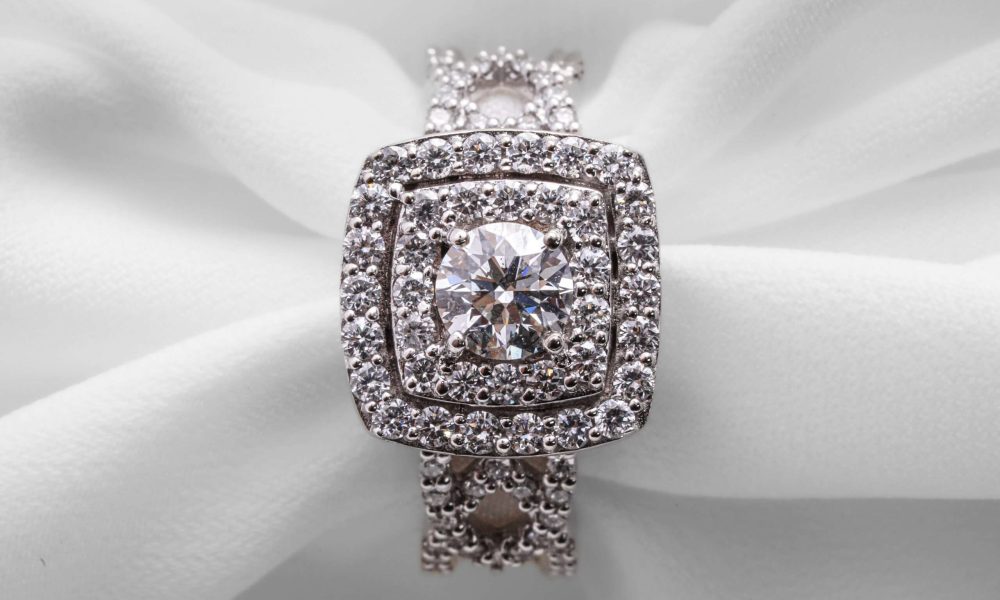
A halo places smaller diamonds around the main stone, increasing the overall visual diameter. Buyers should inspect the quality of the small-stone setting carefully because these designs contain more components requiring maintenance over time.
The Earring Back Deserves Attention
A beautiful diamond is of little use if the earring does not sit comfortably or feels insecure.
Push backs are common and convenient. Screw backs provide a threaded mechanism that some buyers prefer for valuable studs, although they take longer to put on and remove.
Larger earrings may benefit from backs with broader support because they can help keep the stone facing forward rather than tilting downward.
Before ordering, check the post thickness, backing style, and how the setting distributes weight across the ear.
Metal Choice Affects More Than Colour
White gold and platinum can create a visually continuous look around colourless or near-colourless diamonds. Yellow and rose gold introduce warmer contrast and can make the setting a stronger part of the design.
Platinum and gold also differ in density, wear characteristics, maintenance, and price.
For people who plan to wear their earrings frequently in Singapore’s warm, humid climate, routine cleaning is worth considering. Skin oils, cosmetics, hair products, and everyday residue can reduce visible sparkle long before anything is technically wrong with the diamond.
A soft jewellery brush, suitable cleaning method, and periodic setting inspection can help maintain appearance and stone security.
Ask These Questions Before Ordering
A useful diamond earring consultation should go beyond carat weight.
Ask for the weight and dimensions of each individual diamond rather than only the combined total. Compare the stones side by side for brightness, outline, and colour consistency. Confirm the setting metal, earring-back mechanism, and grading documentation supplied with the pair.
For larger diamonds, reviewing recognised grading reports can provide clearer information about colour, clarity, measurements, and other recorded characteristics.
The strongest purchase is rarely the pair with the highest grades in every category. It is the pair where visible size, cut quality, matching, setting construction, comfort, and budget have been balanced around how the earrings will actually be worn.